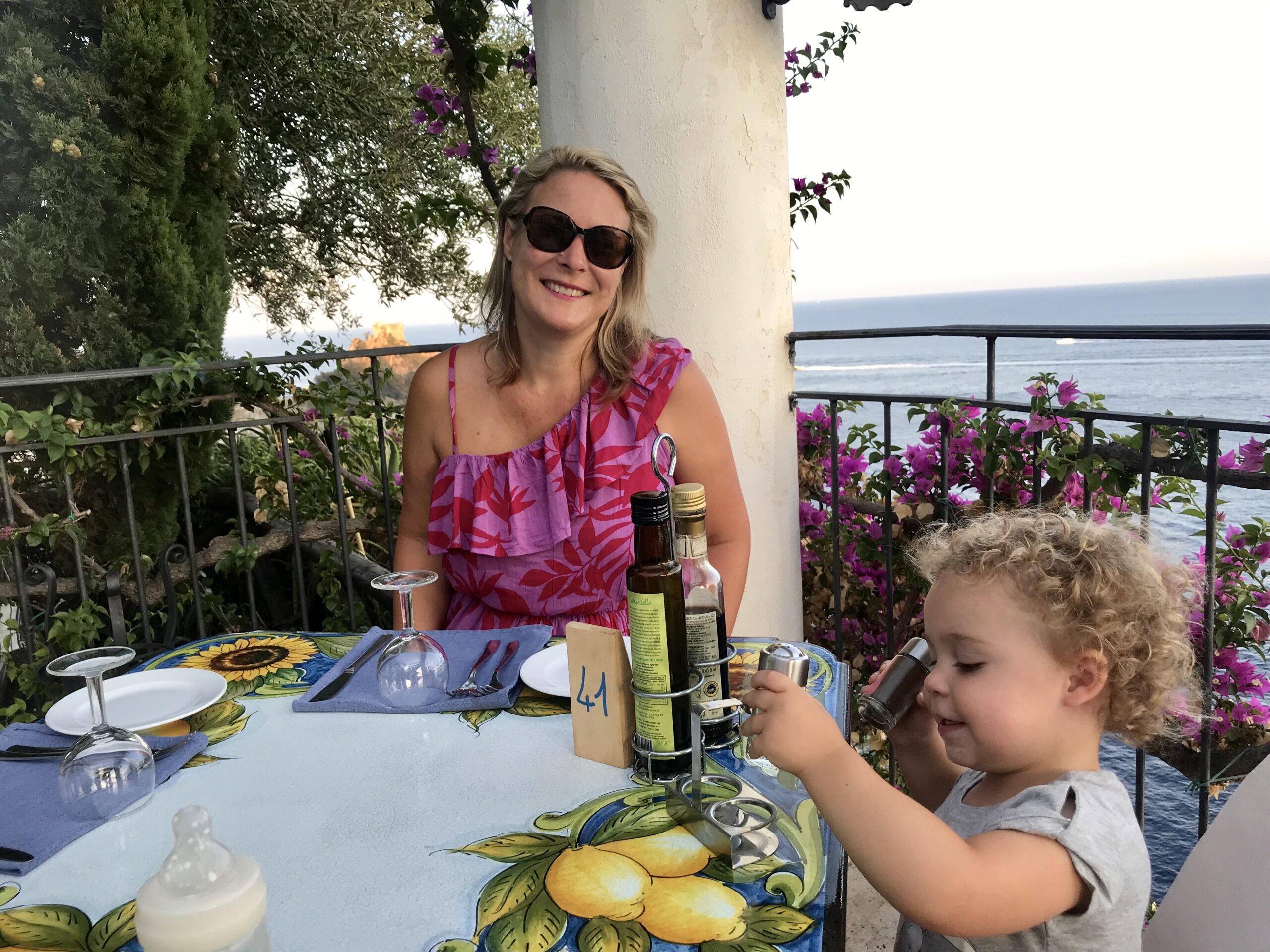
Some destinations arrive with impossibly high expectations. You’ve seen the photographs, watched the movies and scrolled past countless images, wondering if anywhere could really look that beautiful.
The Amalfi Coast somehow exceeds all of it.
I’ve now visited three times over the years, and each trip has been completely different from the last. The first was in my twenties while I was living in London and working at BBC Television. Years later, I returned with my husband and daughter, and then again for a friend’s 55th birthday with my mother and aunt.
Looking back, I’ve realised that the Amalfi Coast changes depending on the stage of life you’re in. I’ve experienced it as a carefree traveller in my twenties, as a young mum with a toddler and as part of a multi-generational family holiday.
Each visit gave me a different reason to fall in love with this part of Italy.
If you’re planning your first trip, here’s what I’ve learned along the way.
Choosing Where to Stay
One of the biggest decisions you’ll make is where to base yourself. Over the years I’ve stayed in three very different types of accommodation, and each suited that stage of life perfectly.
Budget-Friendly: Santa Fortunata Camping Village, Sorrento
On my first visit, a friend and I stayed at Santa Fortunata Camping Village in one of their simple bungalows overlooking the Bay of Naples.
It was affordable, relaxed and full of young travellers from across Europe. We didn’t have a car, so getting around sometimes became part of the adventure, including the occasional ride on the back of a scooter. That’s all part of what made the trip so memorable.
The campground had swimming pools, access to a private beach and incredible views towards Mount Vesuvius and Capri. But some of my strongest memories aren’t of famous landmarks. They’re of meeting travellers from Finland, watching enormous full moons rise over the Mediterranean and feeling completely carefree for ten summer days.
If you’re travelling on a budget or visiting with friends, don’t overlook accommodation like this. It offers a very different experience from the luxury hotels, but one that’s every bit as memorable.
For a Romantic Escape: Hotel Le Conca Azzurra
When we returned a few years later, we stayed at Hotel Le Conca Azzurra in Conca dei Marini.
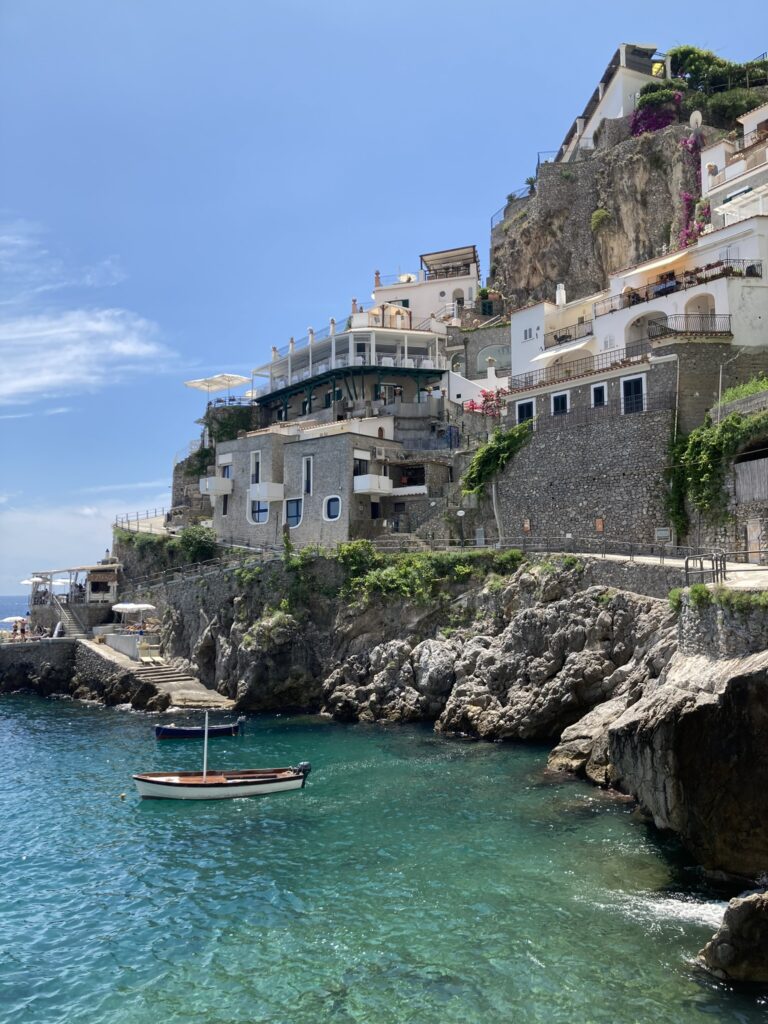
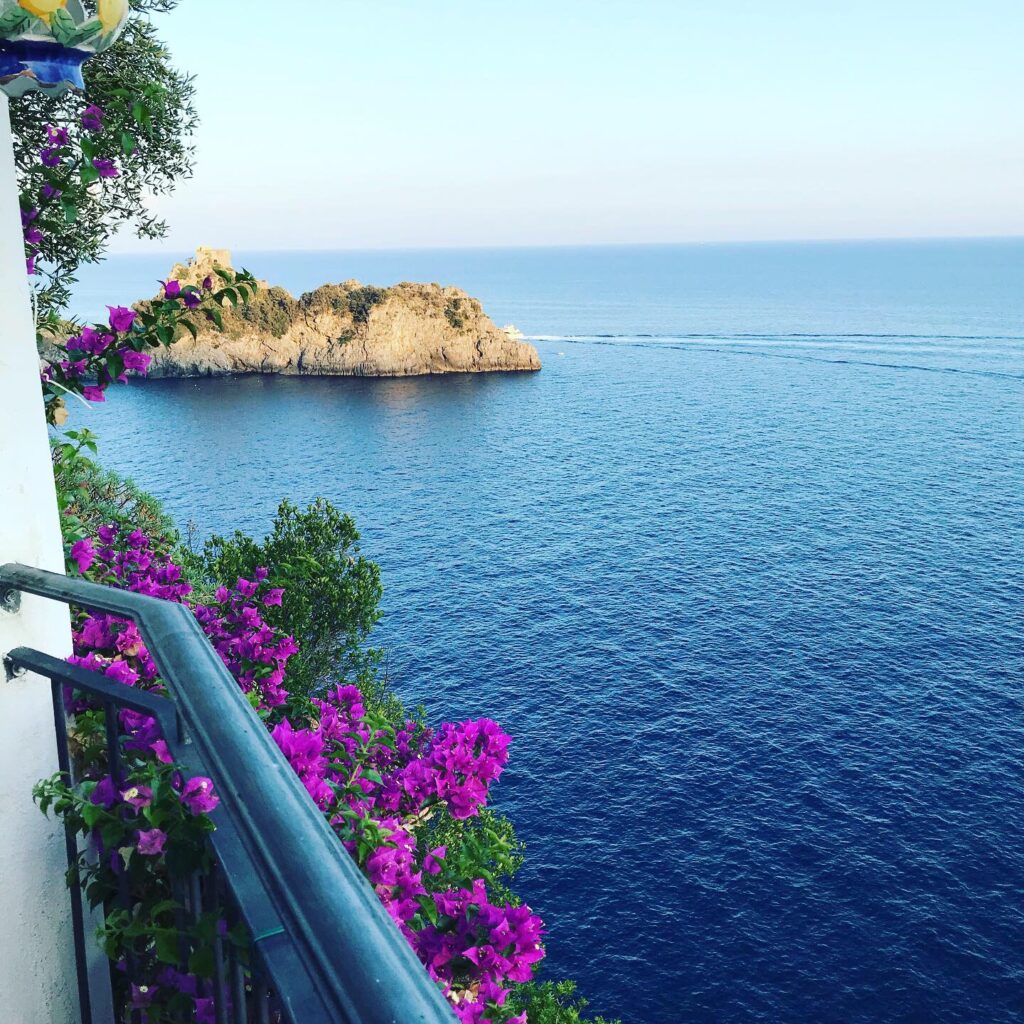
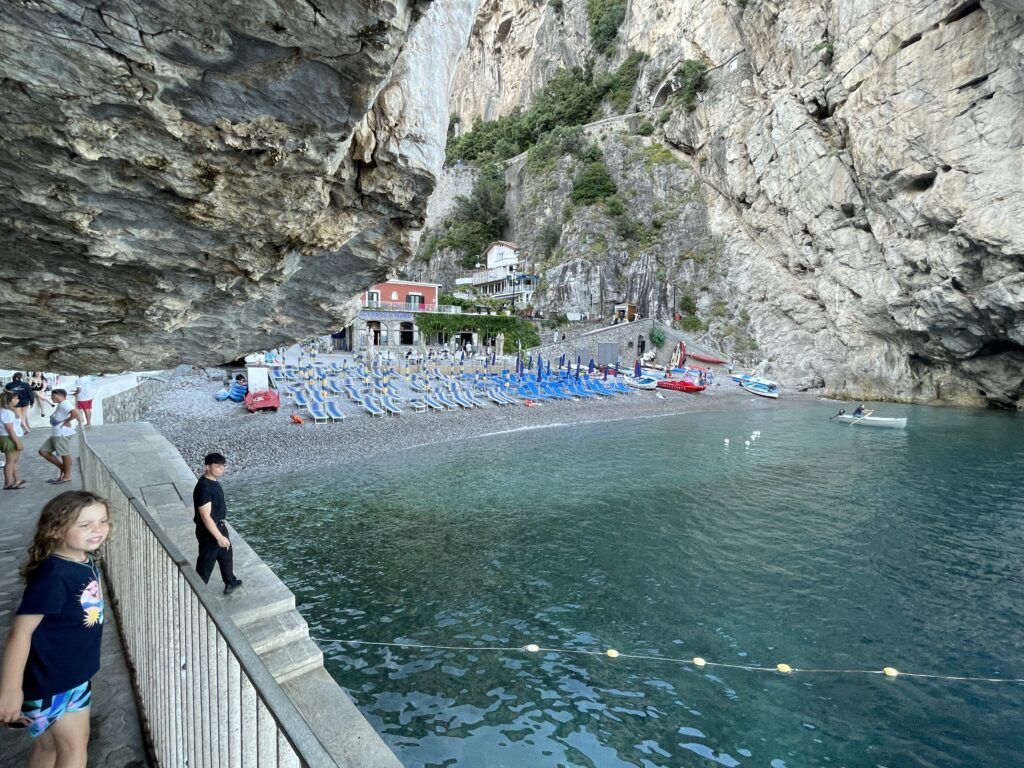
At the time, it had been recognised as one of Italy’s most romantic hotels, and after spending a few days there, I could understand why. Built into the cliffs overlooking the Mediterranean, it felt peaceful and removed from the crowds that fill Positano and Amalfi during summer.
The hotel had a beautiful restaurant overlooking the water, a ceramics boutique serving coffee and gelato, private swimming access and even a lift carved into the cliffs leading down to a tiny dock below. From there, boats collected guests for beach clubs and day trips along the coastline.
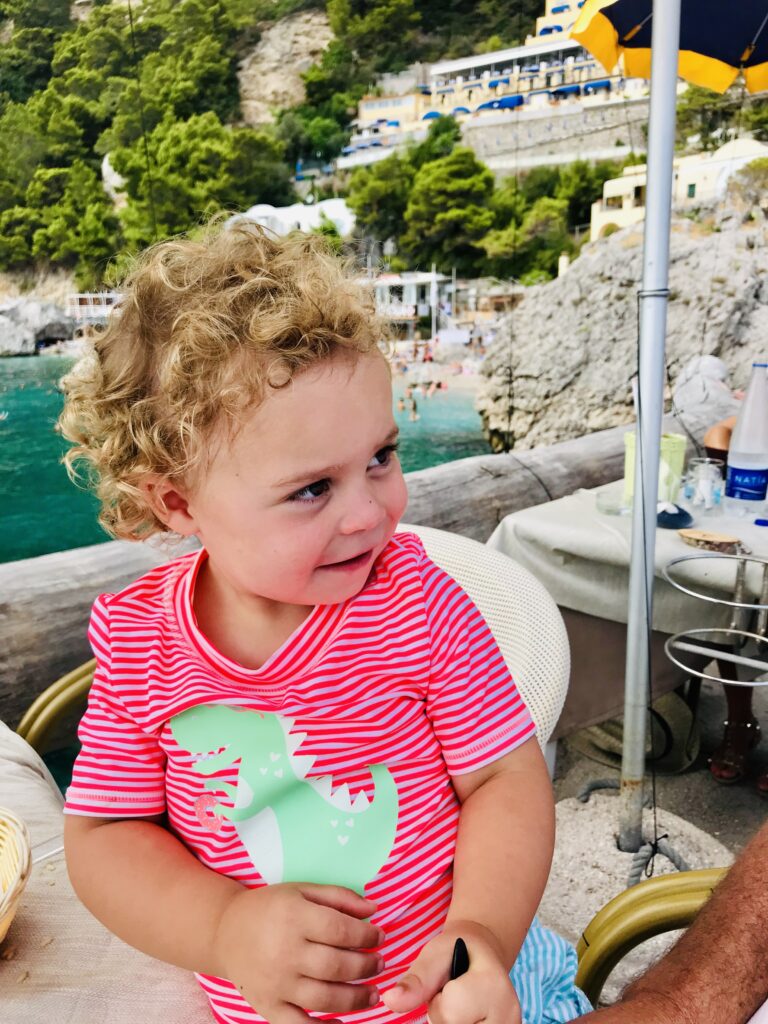
It was also during this trip that I realised Italy can be a wonderful destination for families. Our daughter was only a toddler, and while there were the usual moments of chaos, including discovering she’d covered part of our hotel wall in pen just before checkout, it became one of our favourite family holidays.
People often worry that destinations like the Amalfi Coast might feel too sophisticated for young children, but we found exactly the opposite. Children were welcomed everywhere we went. Evenings often meant wandering through little piazzas with gelato in hand, stopping at playgrounds before bedtime and enjoying long dinners where having a toddler with us never felt like a problem.
And honestly, it’s hard for a child to have a bad holiday in a country built on pizza, pasta and gelato.
For Families: Renting a Villa
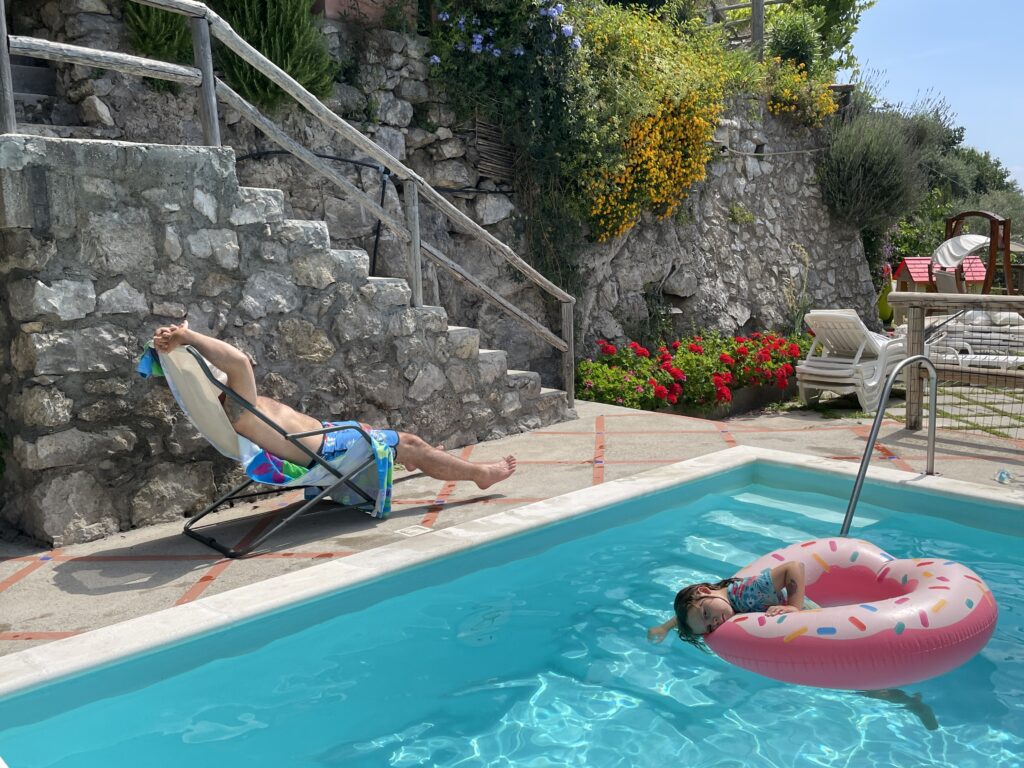
The third time we visited, there were five of us travelling together, so renting a villa near Conca dei Marini made much more sense. Having a kitchen, washing machine and shared living areas made the trip considerably easier, particularly with multiple generations travelling together.
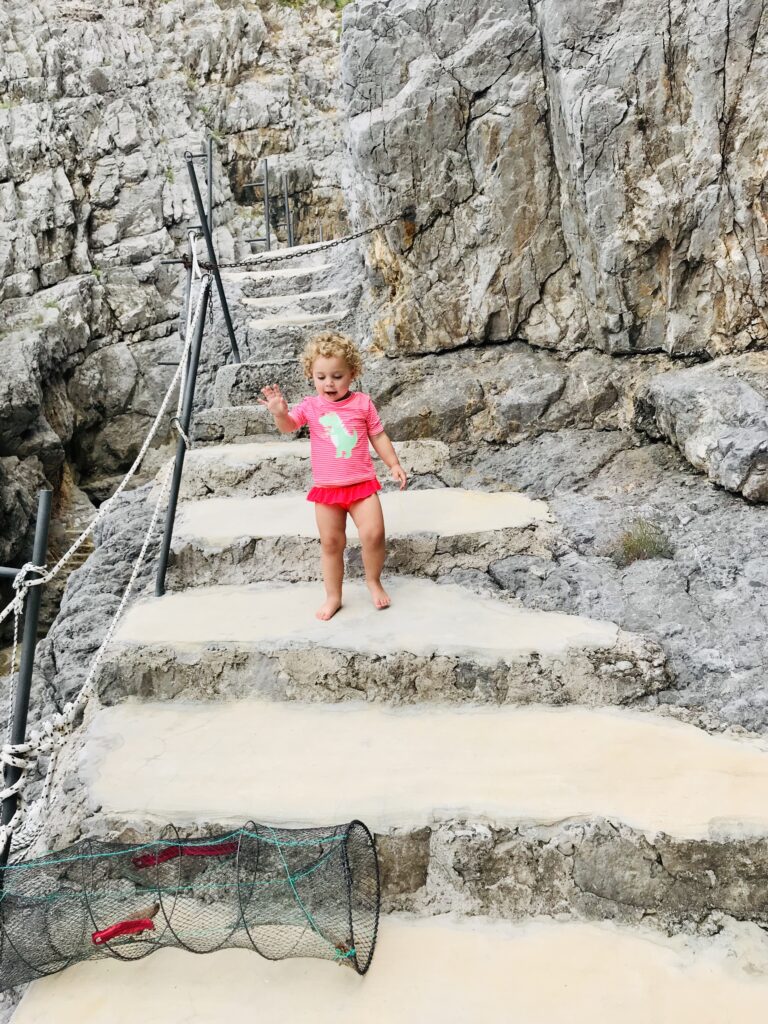
Like many homes along the Amalfi Coast, however, it came with one important thing to know: stairs.
Lots of them.
When we arrived, the property manager arranged for local porters to carry our luggage because there was simply no practical way to wheel suitcases from the road to the house.
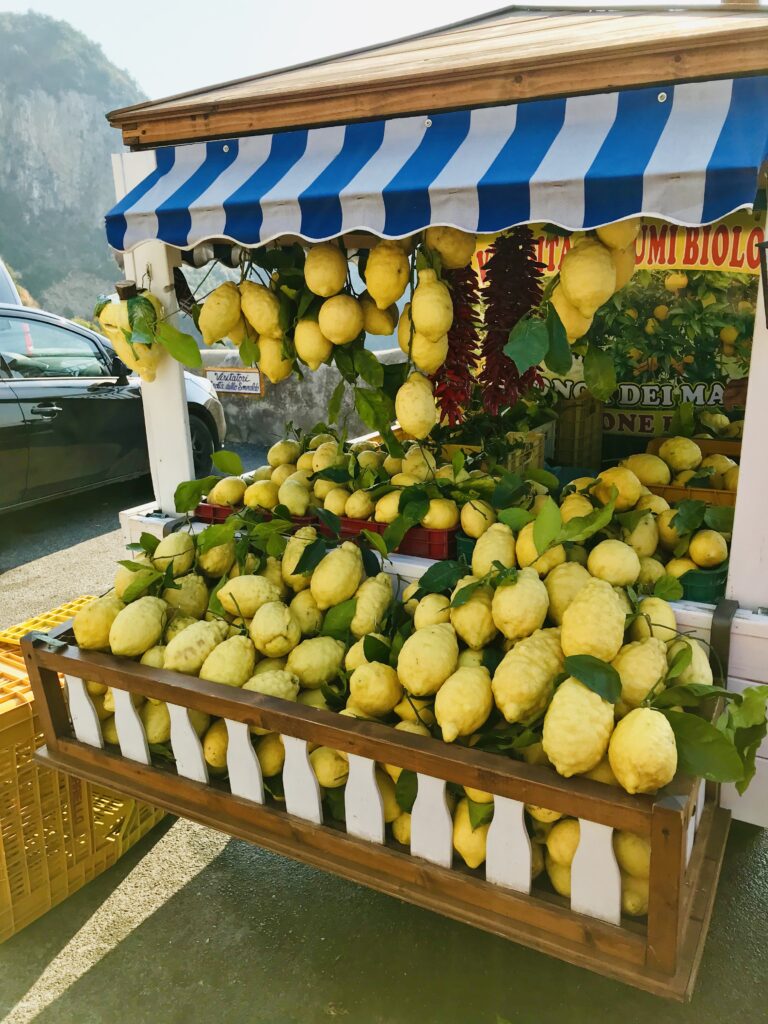
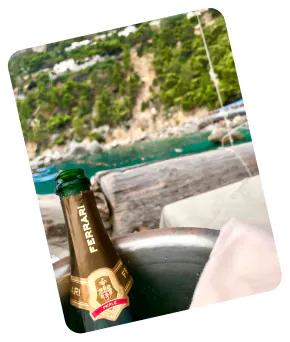
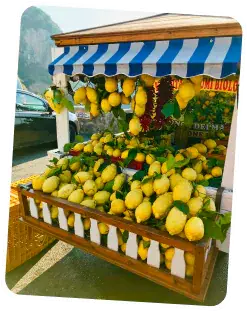
Once we reached the top, though, it all made sense. Our terrace overlooked the Mediterranean, lemon trees covered the hillsides and most afternoons naturally drifted into aperitivo hour with a glass of prosecco while we watched the boats pass below.
If mobility is a concern, or if you’re simply travelling with heavy luggage, it’s worth checking exactly how many steps are involved before booking accommodation anywhere along the Amalfi Coast.
Places Worth Visiting
There are countless towns and villages to explore along the coast, and you could easily spend an entire trip moving between them. These are a few of the places and experiences that have stayed with me.
Praiano
Praiano is one of the Amalfi Coast’s quieter and more relaxed villages, and well worth visiting for a long lunch or an afternoon by the water.
The roads getting there are famously winding, with dramatic hairpin bends hugging the cliffs, so unless you’re confident driving in Italy, a taxi or private driver may be the less stressful option.
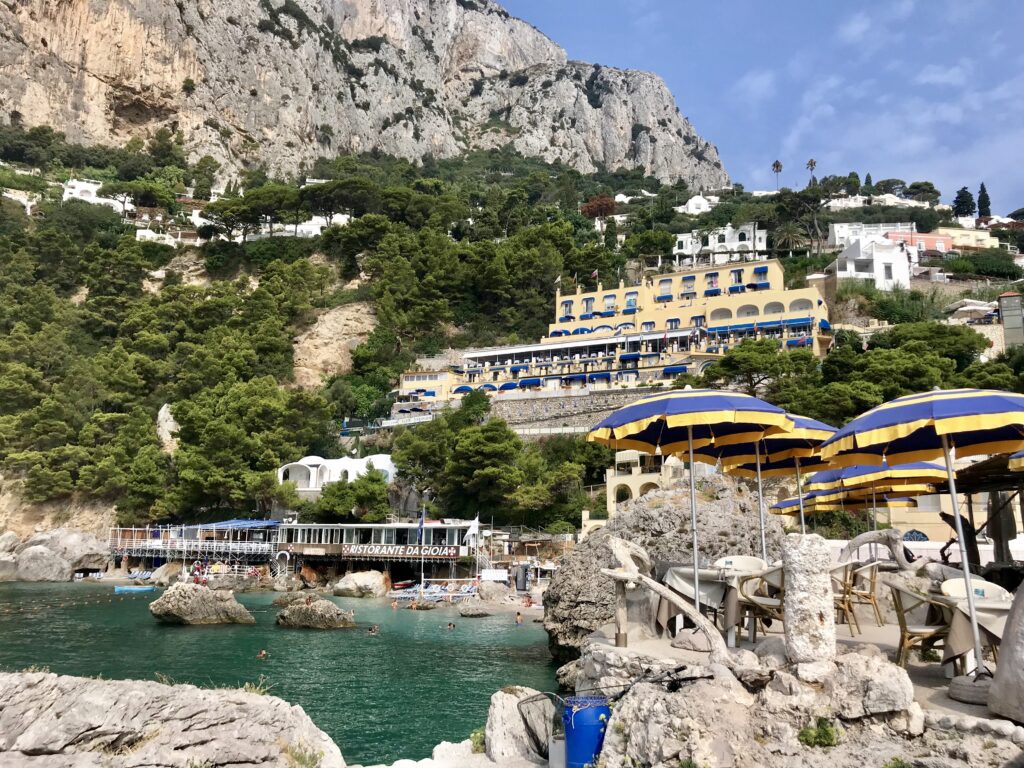
We celebrated a friend’s 55th birthday at Il Pirata, a restaurant built directly into the rocks overlooking the sea. It was exactly the kind of setting you’d hope to find on the Amalfi Coast, and a wonderful place for a celebration.
Capri
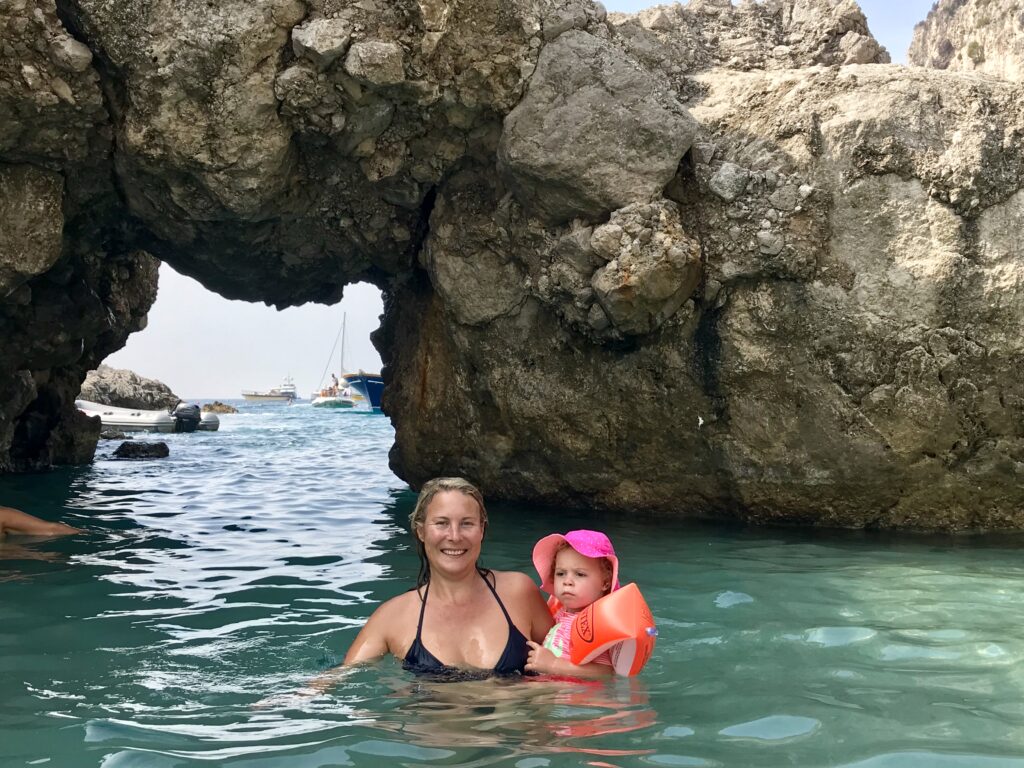
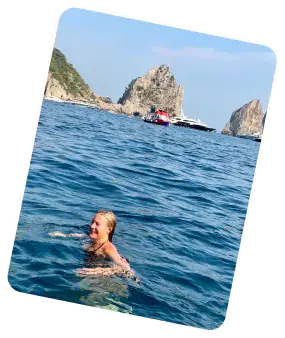
One of the highlights of our trips was taking a small boat tour around Capri. Our boat held around ten people, and we spent the day swimming in impossibly clear water near the famous Faraglioni rock formations before heading ashore for lunch and a wander through the village.
It was exactly the sort of glamorous Mediterranean day people imagine when they think of an Italian summer.
Amalfi Town
Amalfi itself is busy during peak summer, but I still think it’s absolutely worth experiencing. The cathedral, bustling piazzas, little boutiques and endless gelato shops give the town a lively atmosphere, and it’s also a useful place for organising ferries and day trips along the coast.
Driving along the Amalfi Coast is beautiful, but genuinely challenging. The famous coastal roads are narrow, steep and often chaotic.
If you plan on renting a car, make it a very small one. Parking is limited, roadside spaces are tight and I’m fairly certain we returned one rental vehicle with several new scratches acquired while attempting to squeeze into impossible parking spots.
One Lunch Spot Worth Booking
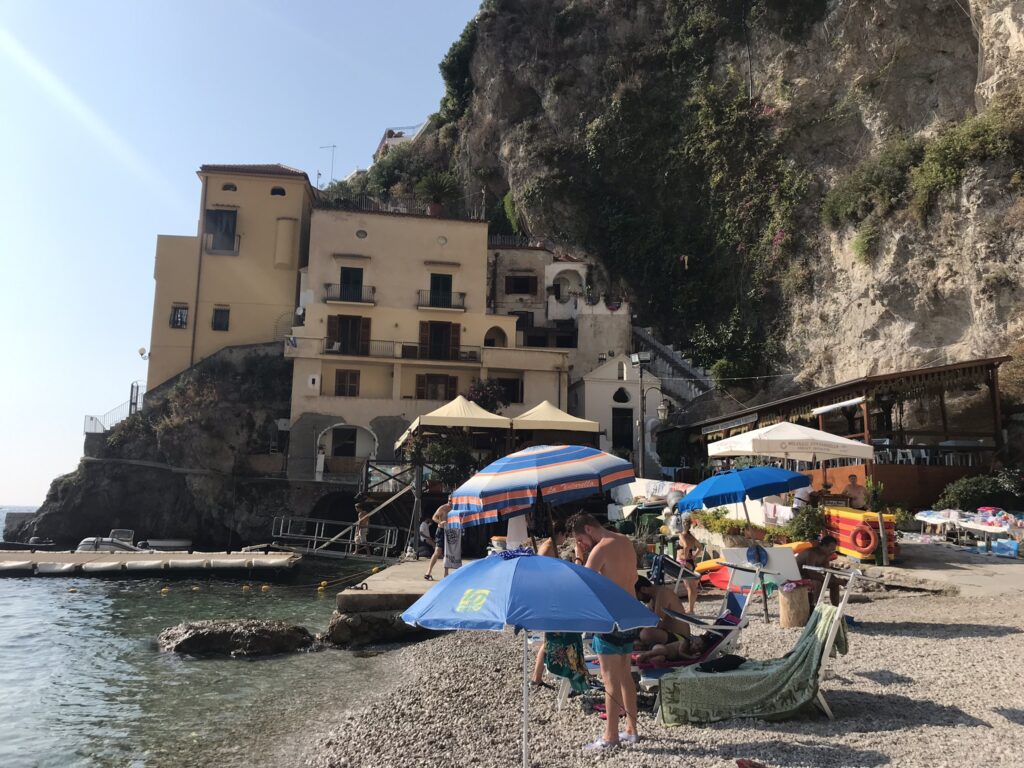
For lunch and swimming, one of my favourite spots is La Tonnarella in Conca dei Marini.
If you reserve ahead, they can sometimes collect guests by small boat, which makes arriving for lunch feel considerably more glamorous than it probably needs to be. Combine it with a swim and a long lunch overlooking the Mediterranean, and it’s a lovely way to spend an afternoon.
Getting Around the Amalfi Coast
The closest major airport is Naples, and over the years I’ve arrived in the area by train, plane and car.
Having a car gives you flexibility to explore quieter beaches and smaller villages, but driving here isn’t for everyone. The roads are narrow, parking can be difficult and summer traffic can make relatively short distances take much longer than expected.
If relaxation is the priority, I’d consider basing yourself somewhere convenient and using ferries, taxis or private drivers for at least some of your exploring. Sorrento worked particularly well for us on our first trip and has excellent transport connections, while Conca dei Marini gave us a much quieter experience closer to the water.
Final Thoughts
Yes, the Amalfi Coast can be crowded, expensive and chaotic in peak summer. But there’s also something undeniably magical about it, and I personally prefer visiting when the weather is warm enough to swim in the Mediterranean.
Perhaps it’s the sparkling water, cliffside villages, lemon-covered hillsides or simply the way a long lunch can somehow drift into late afternoon without anyone appearing to care what time it is.
What I love most, though, is that the Amalfi Coast has given me something different every time I’ve visited. In my twenties, it was about freedom, new friends and summer adventures. Returning with my daughter showed me how wonderful Italy could be as a family destination, while our most recent trip was about celebrating with people we love and enjoying everything at a slightly slower pace.
Three trips, three completely different experiences, and somehow I still feel as though there’s more of the Amalfi Coast left to discover.
And every time I leave, I find myself thinking about when I can return.
Mrs Globetrotter’s Tips
Best for: Couples, families, friends and multi-generational trips. It can be romantic, adventurous or wonderfully relaxed depending on where you stay and how you choose to experience it.
How long to stay: Four to seven days gives you enough time to explore without feeling as though you’re constantly moving. If you’re combining the Amalfi Coast with other parts of Italy, I’d still try to give it at least four nights.
Where to stay: Sorrento worked well for convenience and value on our first trip, while Conca dei Marini is my pick for a quieter stay closer to the water. For families or groups, I’d seriously consider renting a villa for the extra space and flexibility.
Don’t miss: A boat trip around Capri, swimming in the Mediterranean, a long lunch overlooking the water, exploring Amalfi and some time in the quieter villages away from the busiest tourist areas.
Favourite lunch: La Tonnarella in Conca dei Marini, particularly if you can arrange to arrive by boat or Il Pirata in Praiano.
Getting around: You can rent a car, but make it a small one and be prepared for narrow roads, difficult parking and plenty of traffic in summer. Ferries and private drivers can make the experience considerably more relaxing.
Good to know: The Amalfi Coast is famous for its steep hills and seemingly endless staircases. Always check the access to your accommodation before booking, particularly if you’re travelling with young children, older family members or heavy luggage.
Would I return? Without question. Three visits have given me three completely different experiences, and I still feel like there’s more of the Amalfi Coast left to discover.
For more articles visit the Destinations page.