As the world slowly started opening up after the COVID lockdowns – except Australia! – we had renewed our US visas and were ready to go just about anywhere.
International travel was still complicated, so we started looking for somewhere that didn’t involve a lengthy application process or particularly restrictive entry requirements. We decided on Aruba.
At the time, I knew very little about the island. It was also, I think, the first Caribbean island I’d ever visited, and I certainly didn’t realise it would be the beginning of a much bigger love affair with the Caribbean.
First Impressions of Aruba
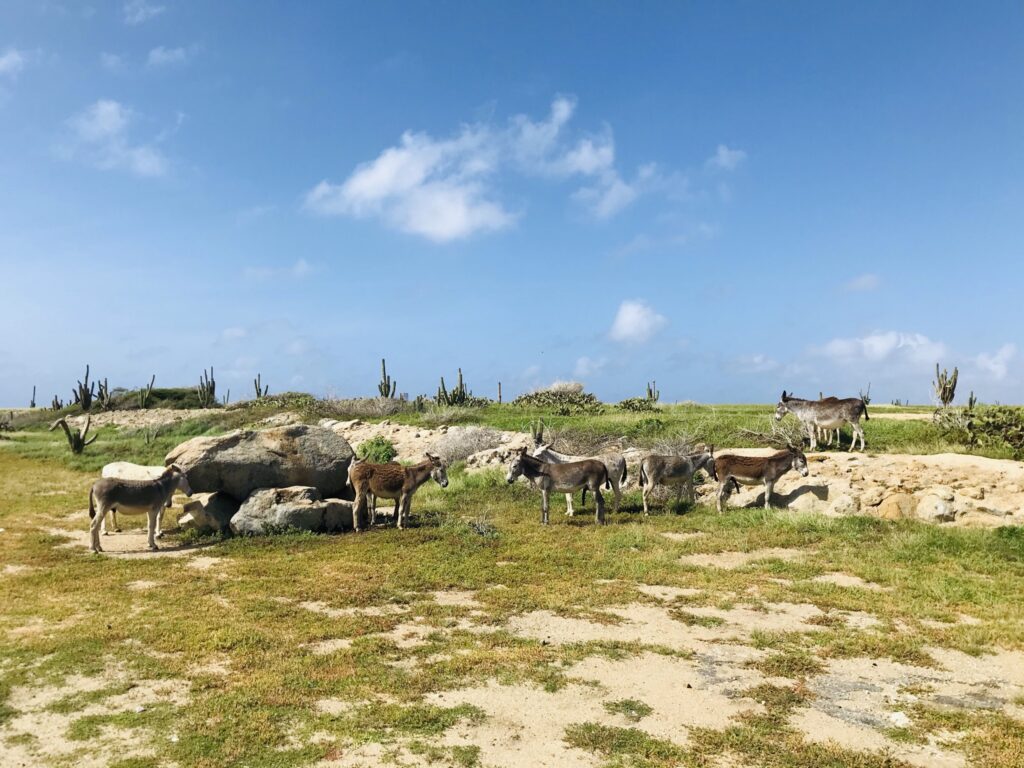
Aruba is a small Dutch Caribbean island with beautiful beaches, a dry climate and a landscape that surprised me. I’d imagined a typically lush tropical island, but once we started exploring, we found desert terrain, cacti and even wild donkeys.
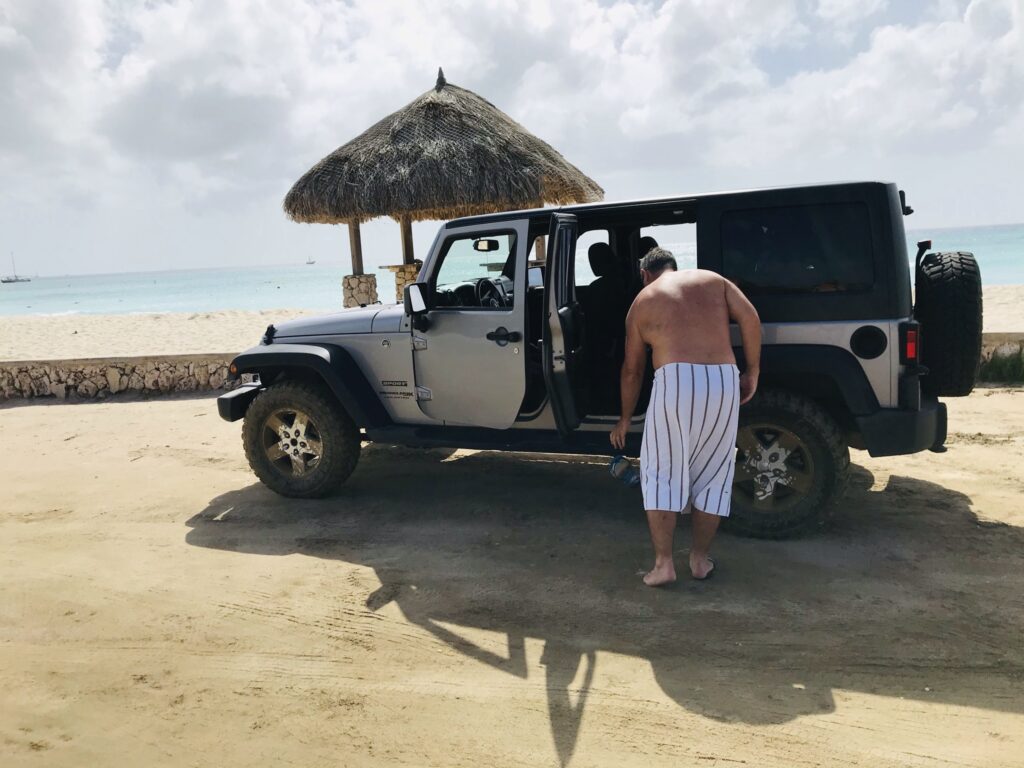
The island has distinct windward and leeward sides, and renting a Jeep gave us the freedom to explore beyond the resort areas and put the four-wheel drive to good use.
Aruba also sits largely outside the Caribbean hurricane belt, which makes it an appealing option at times of the year when weather can be more unpredictable elsewhere in the region.
Where We Stayed
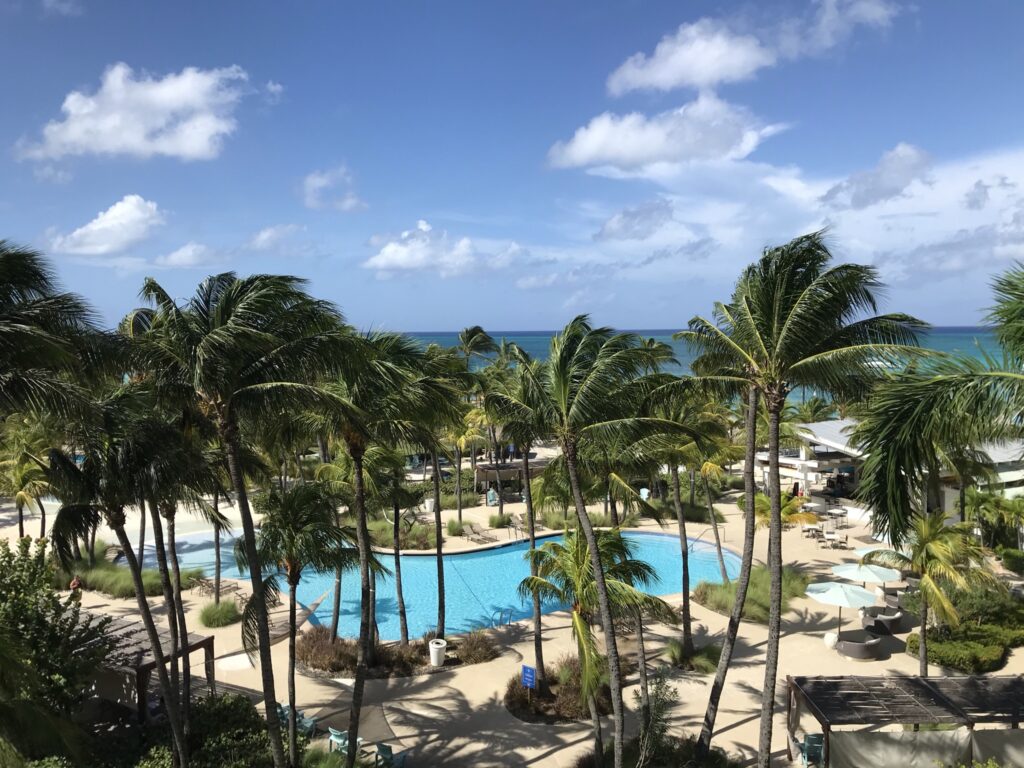
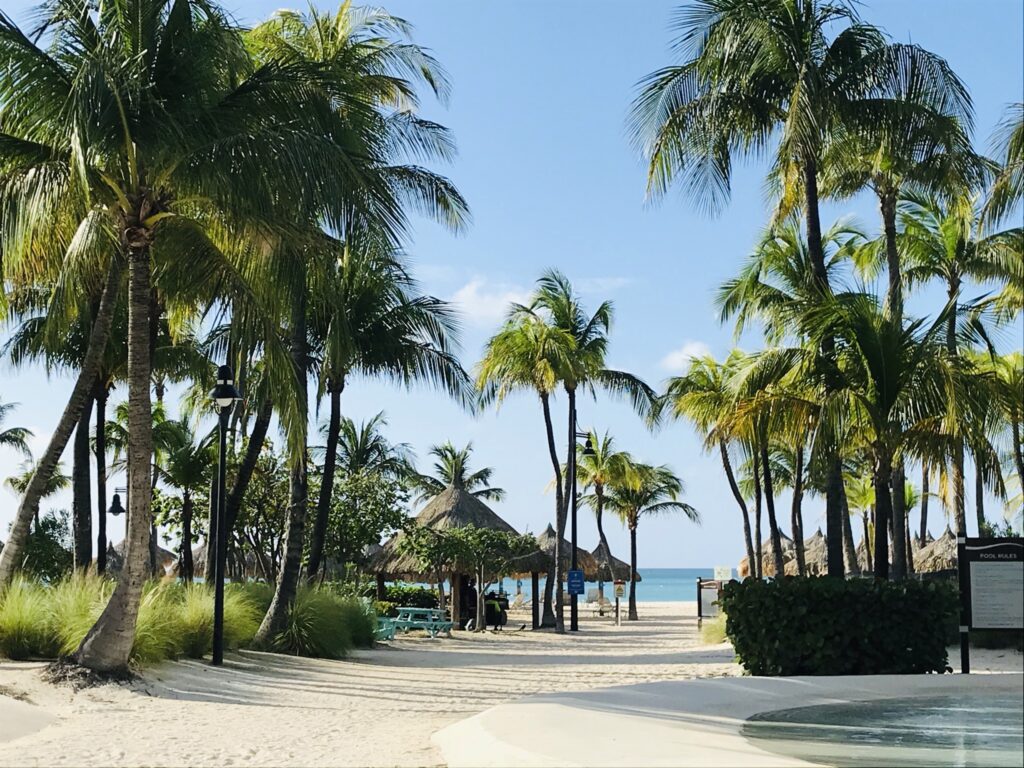
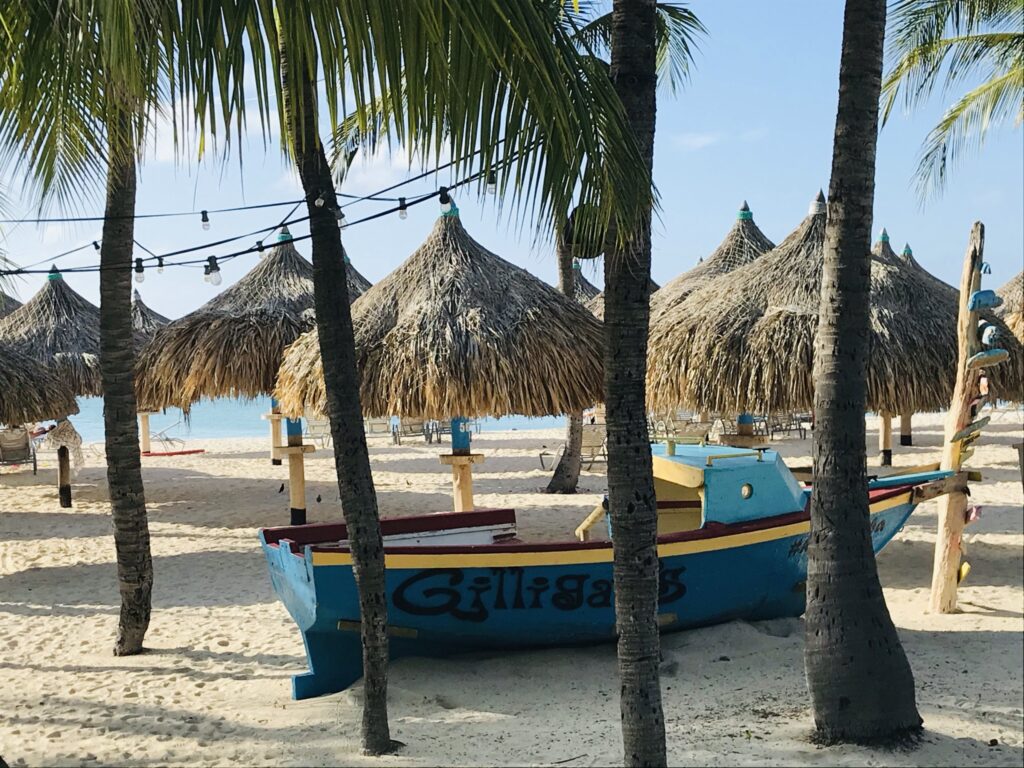
We spent eight nights at the Hilton Aruba Caribbean Resort & Casino on Palm Beach. It was a great base for our first visit, with beautiful pools, hammocks and easy beach access, and we could walk to plenty of restaurants in the evenings.
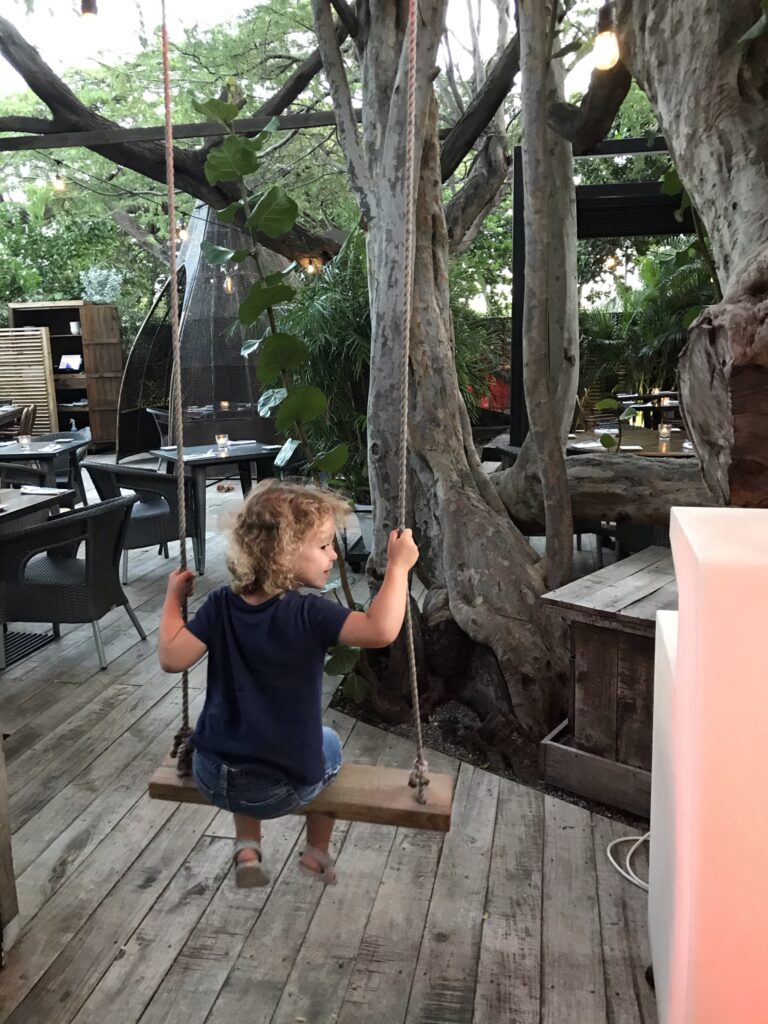
One of my favourites was Bohemian Bar & Restaurant, set in a beautiful tropical garden. The setting was lovely, although I very quickly discovered that mosquito spray was going to be necessary.
We also ate at Gianni’s Ristorante Italiano and Papillon Restaurant, a smaller French restaurant with a great atmosphere.
Exploring the Island
We rented a Jeep for part of the trip and spent several days driving around Aruba. This was where the island really surprised me.
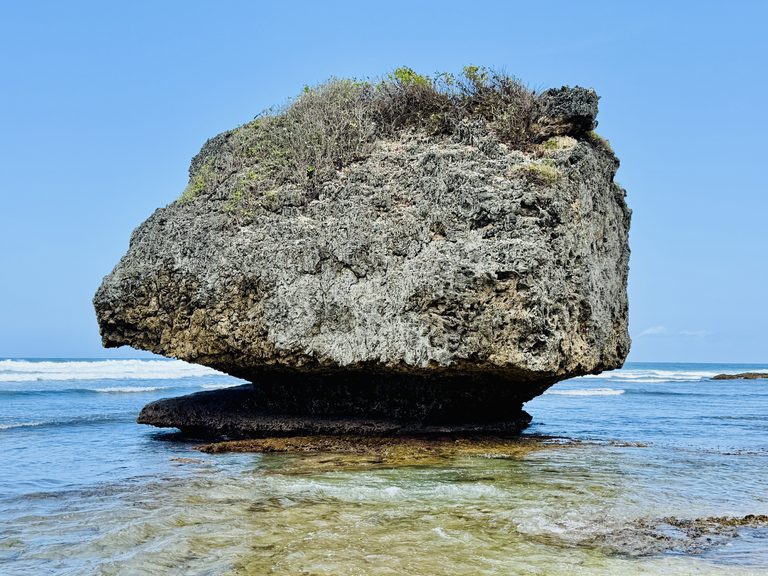
Away from the hotels and beaches, parts of Aruba felt rugged and almost desert-like. We’d drive past cacti, rocky landscapes and donkeys before eventually finding ourselves back beside bright turquoise Caribbean water.
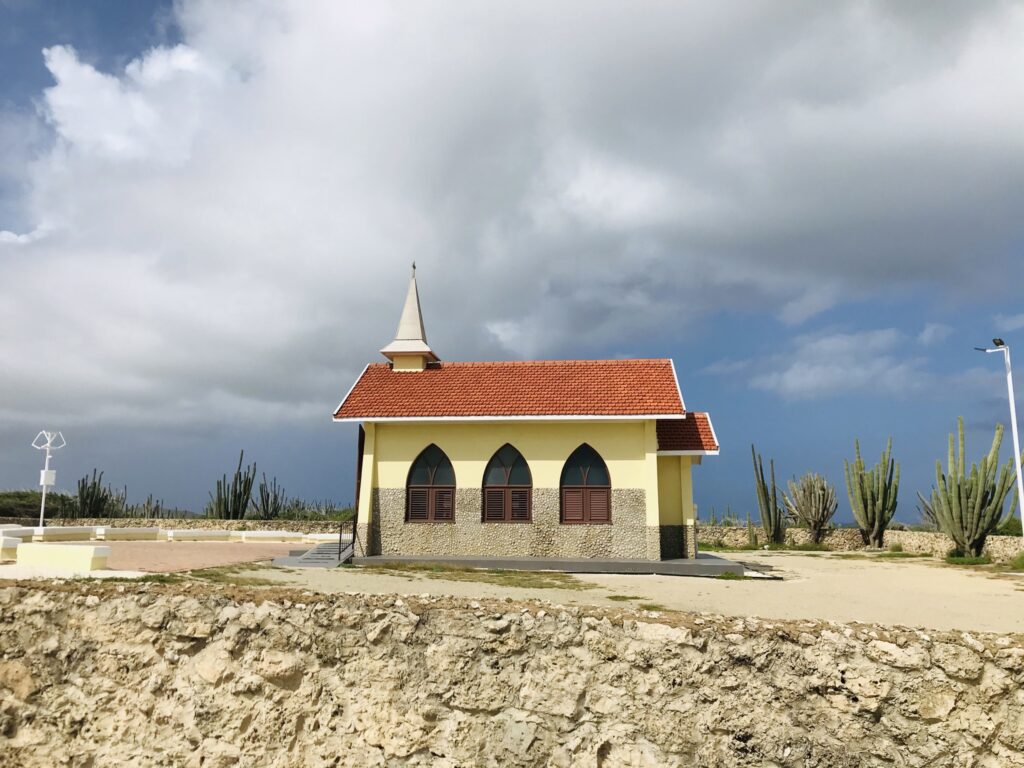
One stop worth making is Alto Vista Chapel, a tiny Catholic chapel sitting in the countryside above the sea. It’s simple and peaceful and makes an easy stop while exploring the island by car.
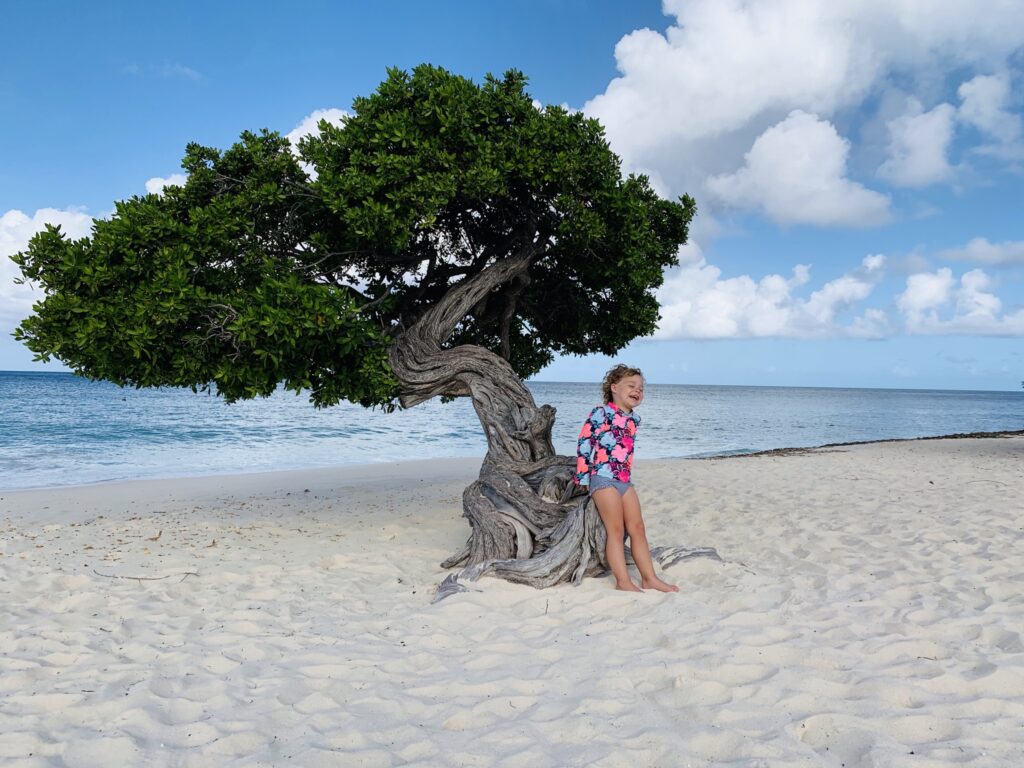
I also loved seeing Aruba’s famous Fofoti trees, particularly on Eagle Beach. Bent by the island’s trade winds, they almost look like enormous bonsai trees growing directly from the sand and have become one of the symbols of Aruba.
Baby Beach
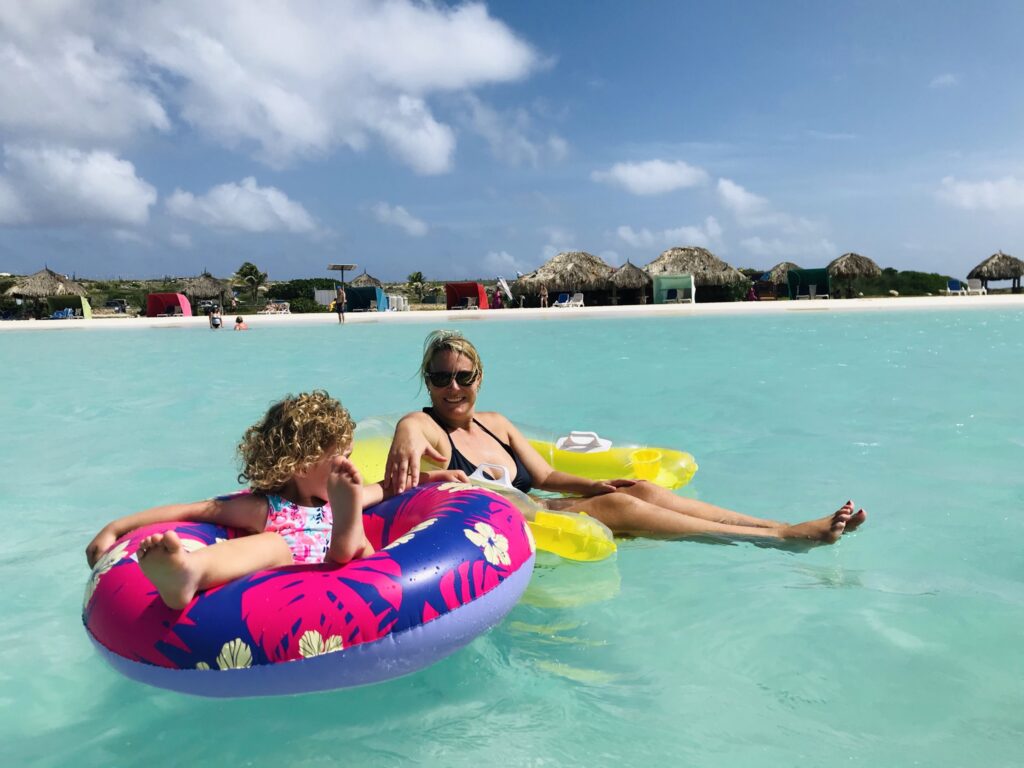
One of my favourite memories from the entire trip is also one of the simplest. We drove down to Baby Beach, a beautiful sheltered lagoon on the southern end of the island.
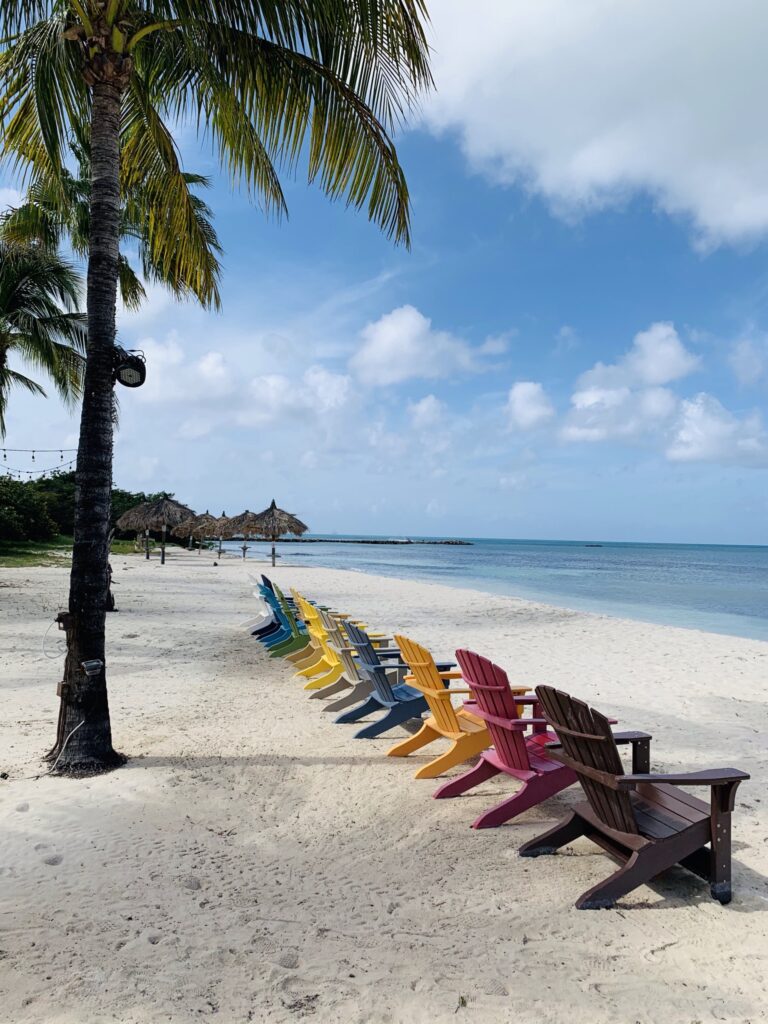
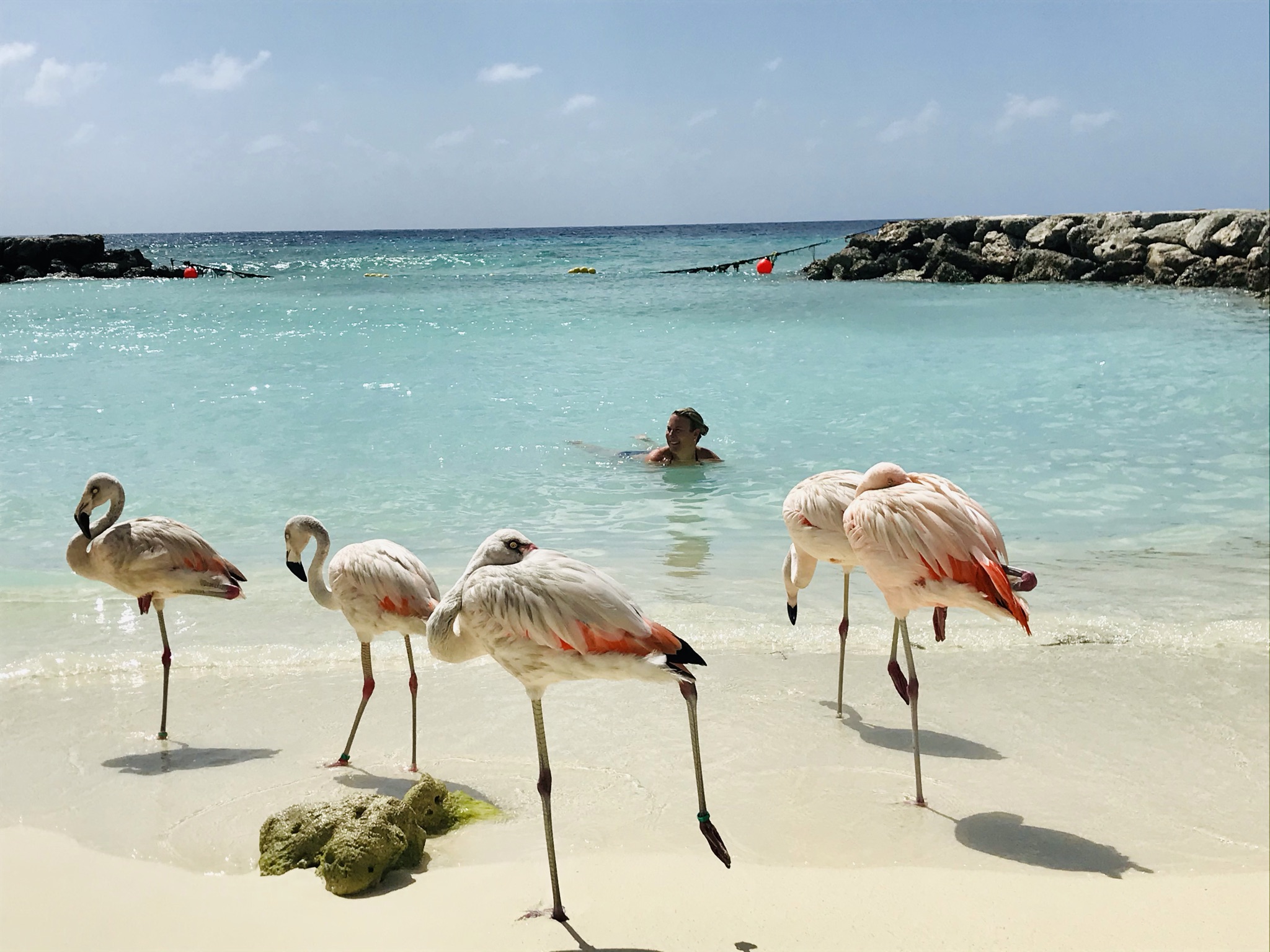
The water was calm, clear and turquoise, with soft white sand and very little swell. I spent what felt like hours floating around on a lilo – or inflatable raft, as I’ve learned to call it since moving to America – doing absolutely nothing.
Sometimes that’s all I really need from a Caribbean holiday.
A Favourite Local Restaurant
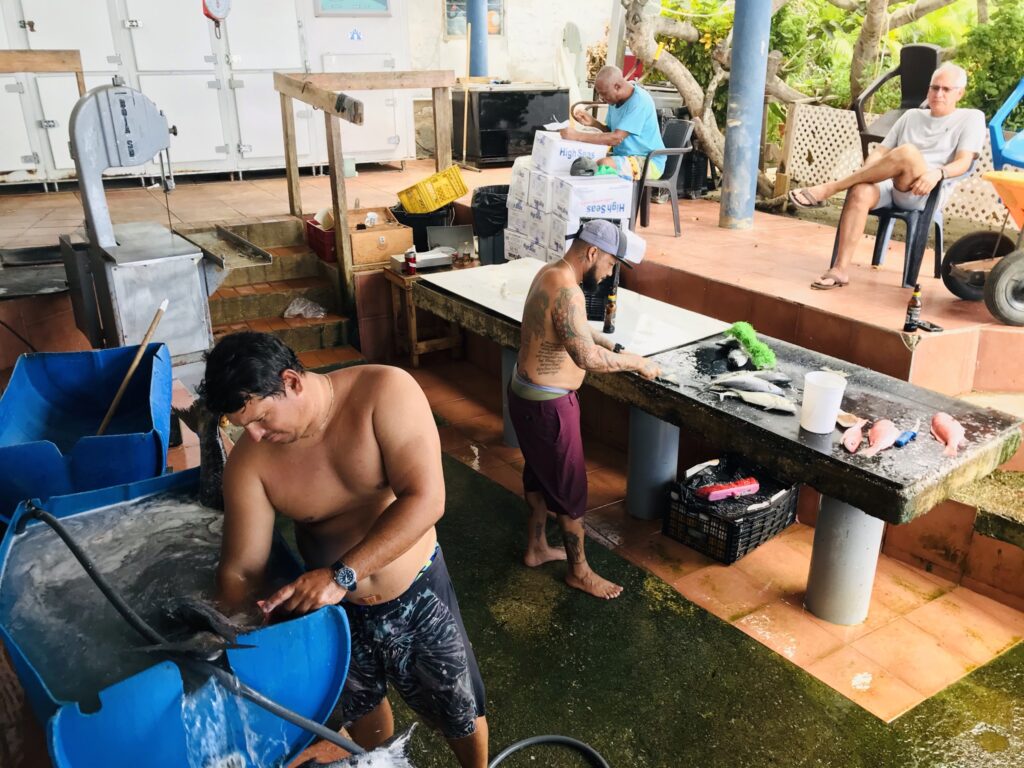
One of our best meals was at Marina Pirata in Savaneta. It’s a rustic waterfront restaurant that’s been around for decades and felt very different from the more polished restaurants around Palm Beach.
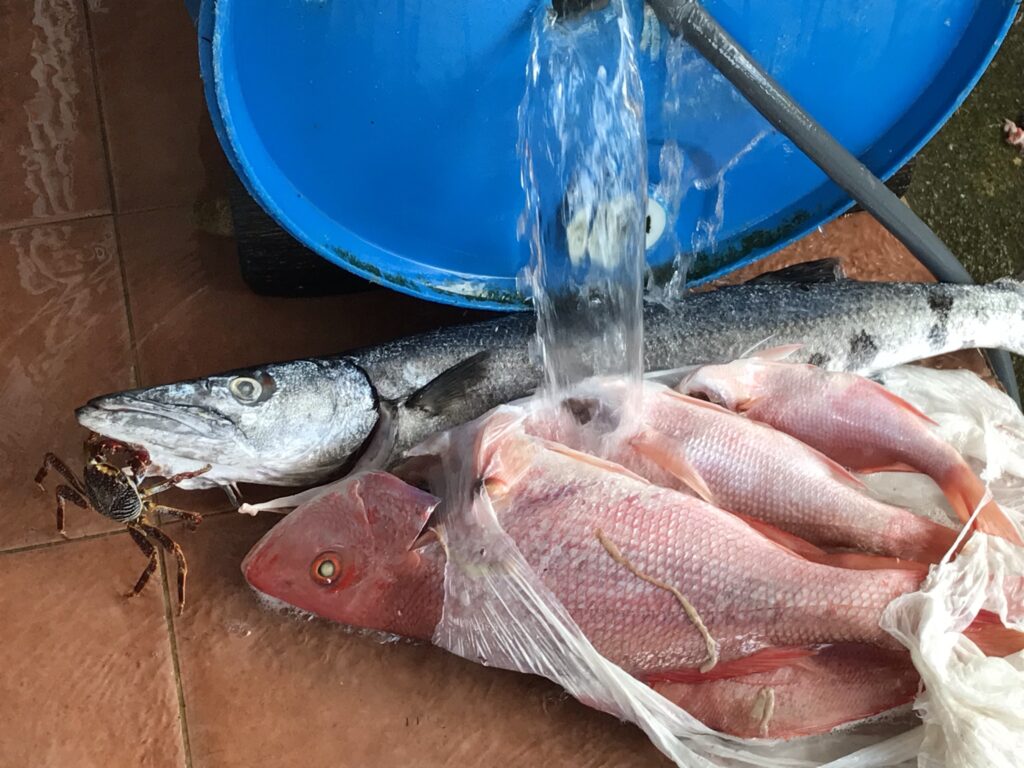
The fish was incredibly fresh, and we were able to choose what we wanted before it was prepared for us. I always appreciate finding somewhere that feels genuinely local when we’re travelling, and Marina Pirata was one of those places.
Aruba’s Dutch Influence
Something else I really enjoyed was Aruba’s European influence. The island has a long and complicated history, including periods of Spanish and Dutch control, and today it remains a constituent country of the Kingdom of the Netherlands.
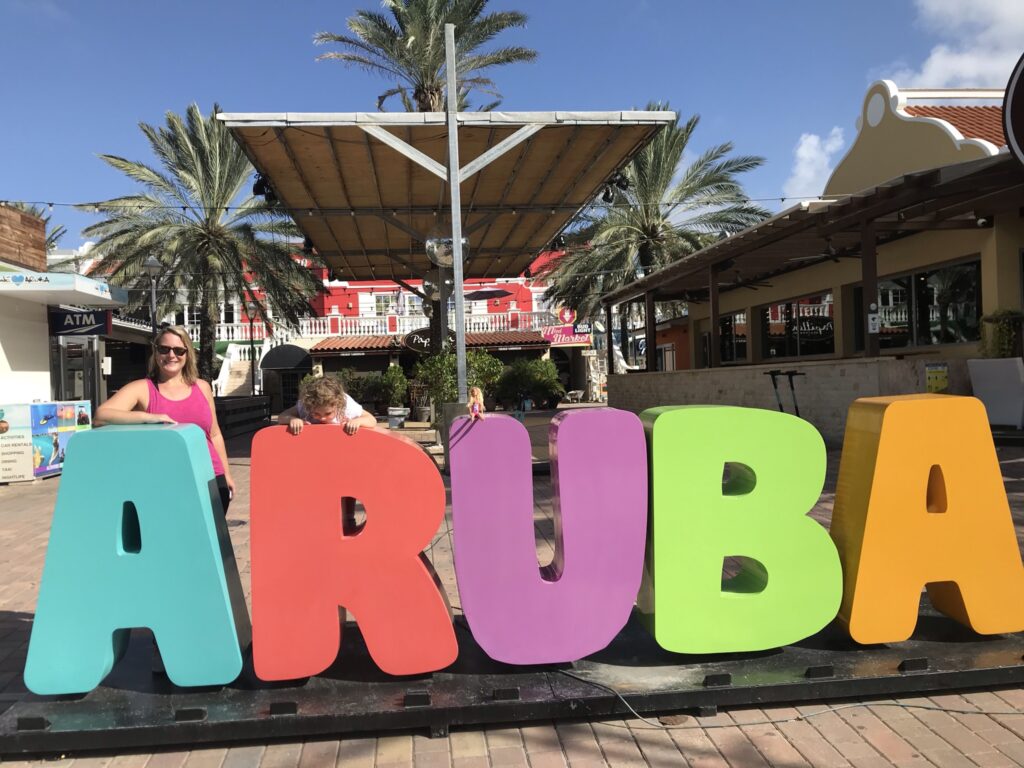
After spending so much time in the United States, I enjoyed the change. You notice the Dutch influence in the architecture, food and supermarkets, particularly around Oranjestad, where the colourful buildings give the capital a completely different feel from many other Caribbean towns.
Papiamento and Dutch are Aruba’s official languages, although we found English widely spoken throughout the areas we visited. Even going to the supermarket felt slightly novel because there were so many European products I hadn’t seen for a while.
Visiting Aruba During COVID
Our visit came at an unusual time. Cruise ships hadn’t yet returned in their usual numbers, and walking around Oranjestad, it was obvious how much the pandemic had affected businesses that depended on tourism.
Some shops were still closed, and the city was far quieter than it would normally have been. I felt for the people whose livelihoods had been affected, although as visitors we had the unusual experience of exploring Aruba without the normal crowds.
Restaurants were easy to book, beaches were quiet and there were moments when it felt as though we had parts of the island almost to ourselves. I imagine our experience of Aruba was quite different from what visitors find today.
The $80 Fan
One of my favourite memories actually has nothing to do with beaches or restaurants.
I can’t sleep without a fan, so after arriving in Aruba, we managed to track down a shop selling them and spent about $80 on one, knowing perfectly well there was no way we were going to take an assembled fan home with us.
When it was time to leave, we simply left it in our hotel room. As we were checking out, our housekeeper came running after us calling, “Propeller! Propeller!”
We explained that we’d deliberately left it behind and that she was welcome to keep it. She was absolutely thrilled.
Electronics can be expensive on the island, and the hotel actually had us sign paperwork at reception confirming that we’d given it to her as a gift. Of all the things we did in Aruba, I still remember how happy she was about that fan.
Final Thoughts
Aruba gave me so many of the things I would eventually come to love about travelling in the Caribbean – warm water, beautiful beaches, colourful homes, local restaurants and an easy pace of life. But it also felt distinctly different.
The Dutch influence, desert landscape and rugged coastline gave Aruba its own personality, and renting a Jeep allowed us to see much more than the resort areas.
We happened to visit during an extraordinary moment in the island’s history, when tourism was only beginning to recover and the usual crowds hadn’t yet returned. I’m glad we had the opportunity to experience it, while also hoping the businesses and people we met have since seen the island return to its usual rhythm.
Most importantly, Aruba was the trip that introduced me to the Caribbean. I didn’t know it at the time, but it certainly wouldn’t be the last island we’d visit.
Mrs Globetrotter Tips
- Best for: Couples, families and first-time Caribbean travellers looking for an easy island holiday.
- How long to stay: Seven to eight nights gave us plenty of time to relax and explore beyond the resort.
- Where we stayed: Hilton Aruba Caribbean Resort & Casino on Palm Beach.
- Don’t miss: Baby Beach, Eagle Beach and its Fofoti trees, Alto Vista Chapel, a drive around the island and dinner at Marina Pirata.
- Good to know: Rent a car or Jeep for at least a couple of days. Aruba is small enough to explore easily, and the landscape away from the main resorts is well worth seeing.
- When we visited: Our trip was in November, the weather was great and the water was warm.
- Would I return? Yes. Aruba was my introduction to the Caribbean and the trip that made me want to explore more of the region.
For more articles visit the Destinations page.